
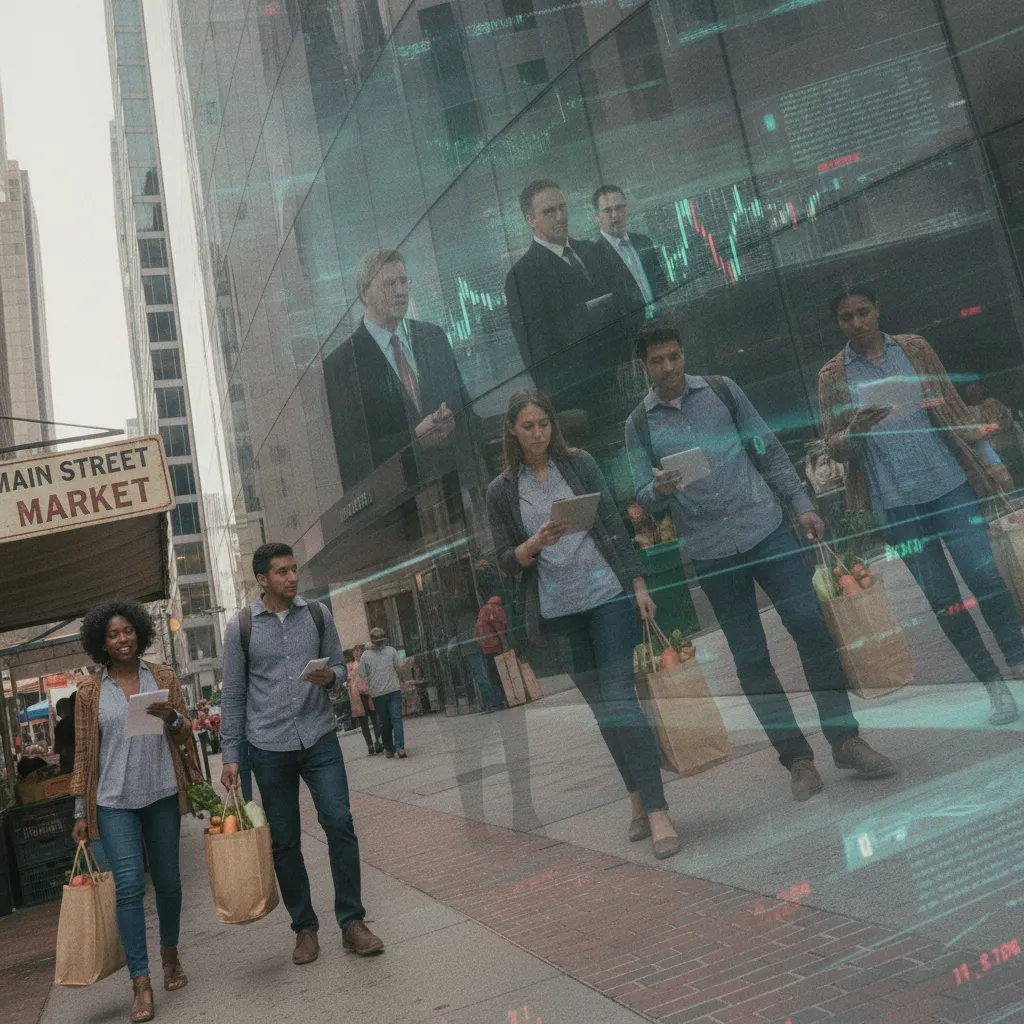
For decades, economists have relied on a comforting mantra that the stock market is not the economy. The idea was simple enough: while traders gamble on future expectations and corporate growth, the actual economy consists of jobs, wages, and how much people spend at the grocery store. However, recent trends suggest that this wall between investor sentiment and daily reality has become increasingly porous, leaving many to wonder if the two have finally merged into one signal.
A prime example of this shift can be seen in the behavior of retail giants like Walmart. Analysts are closely watching these stocks as recession signals because they act as a barometer for the average consumer’s wallet. When shoppers start trading name brands for generic labels or cutting back on non essentials, it shows up in company earnings long before it hits official government data. In this sense, the movement of certain stocks provides a real time window into the financial struggles of households across the country.
At the same time, there is growing anxiety surrounding the meteoric rise of artificial intelligence companies. While AI has driven market indices to dizzying heights, some experts warn that we are staring at a speculative bubble reminiscent of the dot com era. Reports from organizations like the Open Markets Institute suggest that if this particular burst happens, it won’t just hurt wealthy investors but could send shockwaves through the broader economic infrastructure.
Ultimately, whether we call it a mirror image or a mirage, the disconnect between Wall Street and Main Street is shrinking. As high tech valuations intertwine with consumer spending patterns, ignoring the stock market as an economic indicator may no longer be possible. We are entering an era where a crash in a digital boardroom can feel almost instantaneous at a checkout counter thousands of miles away.