
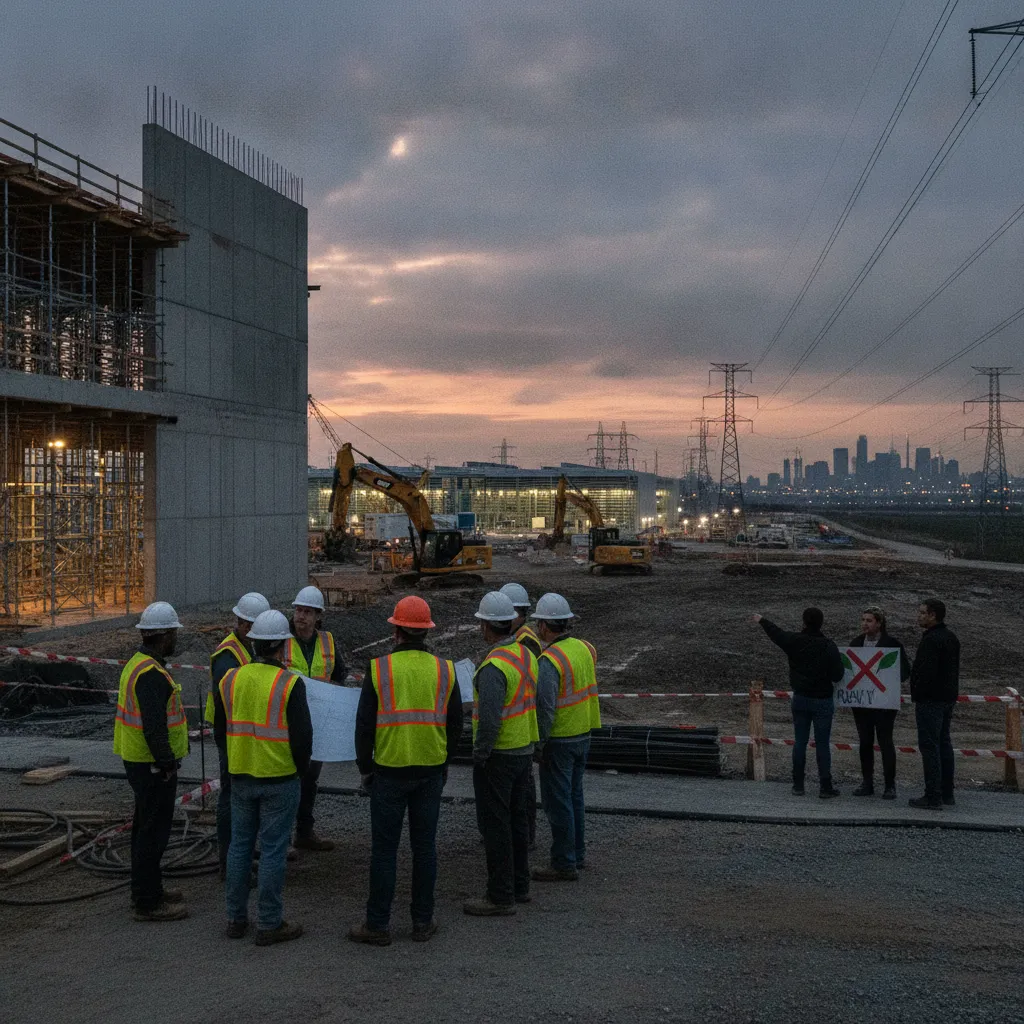
Across the United States, massive data centers are becoming increasingly polarizing landmarks. While local communities often fight their arrival due to environmental and zoning concerns, economists warn that stalling these projects could trigger a significant ripple effect throughout the national economy. A staggering amount of capital is currently fueling this expansion, with federal researchers suggesting that spending on AI infrastructure and power facilities accounted for nearly twenty percent of the U.S. gross domestic product last year.
Industry giants like Microsoft, Amazon, Meta, and Alphabet are leading a frantic race to scale their operations, with planned investments expected to climb toward one trillion dollars by 2027. However, this momentum faces two primary threats: growing political resistance following recent midterm elections and a looming question regarding profitability. Some experts argue that while slowing down construction might satisfy public outcry, it risks crippling the very engine driving current business investment and stock market gains.
Financial analysts express concern that the astronomical costs required to maintain this pace may eventually outstrip the actual revenue generated by AI services. If companies cannot prove that these facilities lead to tangible productivity gains soon, they may be forced to slash capital expenditures. Such a pivot wouldn’t just affect tech firms; it could dampen overall GDP growth and erase billions in perceived wealth for investors who have seen their portfolios soar alongside the S&P 500.
Ultimately, much of today’s consumer spending is being propped up by a wealth effect tied directly to AI optimism. Should investor confidence waver or regulatory hurdles become too steep, a correction in equity prices could transform what is currently an economic catalyst into a substantial drag on growth. For now, the U.S. remains heavily leveraged on the belief that artificial intelligence will create unprecedented riches, leaving policymakers caught between community pushback and macroeconomic stability.