
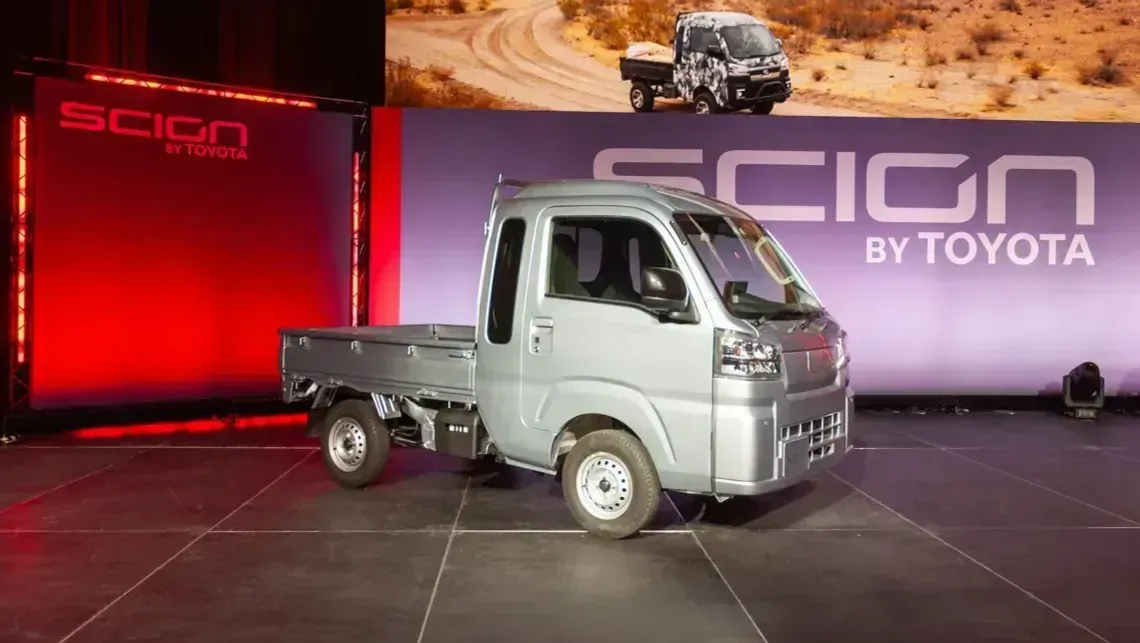
Toyota is dusting off the Scion nameplate a decade after retiring it, but the revived brand looks less like a bid for youth culture and more like a laboratory for unconventional transport. Under the new banner of the Freedom Lab, Toyota plans to introduce the KEI-01, a tiny utility truck inspired by Japan’s iconic Kei vehicles. While enthusiasts have long dreamed of these compact haulers arriving stateside, this version comes with significant caveats. Built in Indiana and slated for release in late 2027, the truck will initially be available only to fleet operators rather than general consumers.
To bypass rigorous federal crash standards, Toyota has engineered the KEI-01 as a low-speed vehicle, meaning it is capped at a top speed of 25 miles per hour. This makes it ideal for ranchers or small business owners operating in tight spaces, though perhaps less so for anyone needing to hit a highway. Interestingly, despite being manufactured in the U.S., the truck will maintain a right-hand-drive configuration. Power comes from a modest 660cc three-cylinder engine paired with all-wheel drive and a CVT, offering a payload capacity of up to 600 pounds in a frame that measures just over eleven feet long.
The rebirth of Scion signals a broader ambition for Toyota to experiment with diverse forms of mobility beyond traditional passenger cars. Along with the mini truck, the company has teased other concepts including a high-performance UTV featuring a turbocharged hybrid powertrain from the Tacoma TRD Pro and an electric folding bike known as the BKE concept. The foldable e-bike is designed specifically for urban shortcuts and can be charged directly from a Toyota vehicle’s power outlet.
While there is some hope that the KEI-01 could eventually move toward limited retail sales based on demand, Toyota is currently keeping things strictly professional via its fleet services division. By utilizing select existing dealerships to handle Scion products, Toyota is treating this relaunch as a controlled trial run for niche vehicles. Whether these eccentric offerings become staples of American roads remains to be seen, but they mark a definitive shift in how the automaker views its role in specialized transportation.