
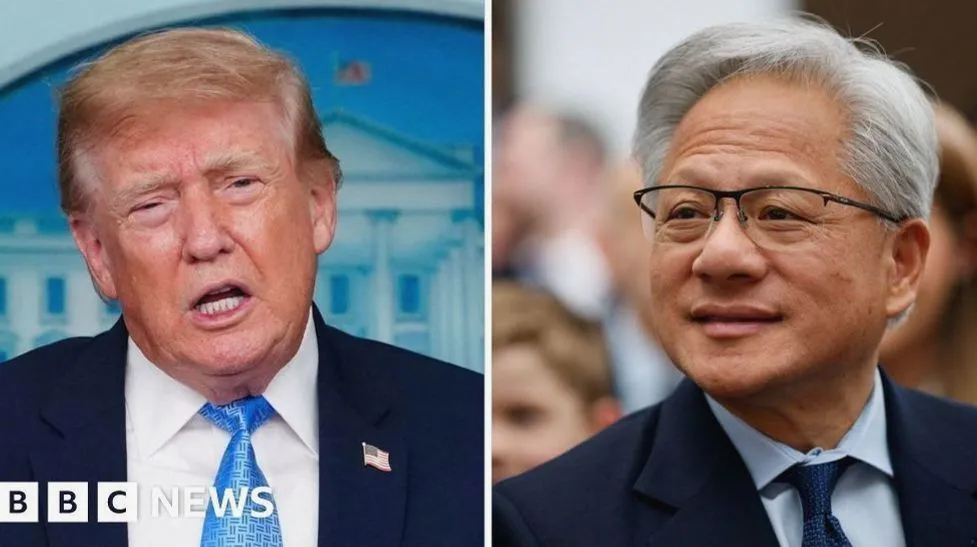
President Donald Trump confirmed that the FBI is investigating a personal relationship between Nvidia CEO Jensen Huang and a woman identified by U.S. intelligence as a Chinese spy. Speaking to reporters at the White House, the president revealed he spoke directly with Huang on Monday to ask if the tech mogul was aware of the woman’s true allegiances. While Trump stated he believes Huang when he claimed to have no knowledge of her espionage activities, describing him as an honorable man who is currently suffering, the situation has cast a shadow over one of the world’s most influential companies.
The woman at the center of the storm, Alice Huang, served as a managing director for Megaspeed, a Singaporean firm with existing ties to Nvidia. According to reports, Secretary of State Marco Rubio had warned Washington officials about the close connection months ago. Because Nvidia produces the high-end semiconductors essential for artificial intelligence—a sector viewed by the U.S. government as a critical battlefield for national security—the revelation has triggered immediate alarm regarding potential leaks of corporate secrets or state interests.
The fallout was felt instantly on Wall Street, with Nvidia losing roughly 250 billion dollars in market value as shares tumbled more than four percent on Monday. Beyond the federal probe, the company now faces a proposed class action lawsuit in California. Shareholders allege that both Huang and Nvidia defrauded investors by concealing his relationship with Alice Huang, claiming she may have used her proximity to the CEO to facilitate the smuggling of restricted hardware into China.
In response to the crisis, Jensen Huang issued an apology for being unfaithful to his wife and family but maintained that he remains committed to protecting American national security. While Nvidia has launched its own independent internal review and insists no sensitive data was compromised, Huang has been summoned for a closed door briefing with Congressional committees next week to discuss security protocols and his interactions with what investigators call a PRC intelligence asset. Meanwhile, Beijing has dismissed all accusations as baseless attempts to malign China.