
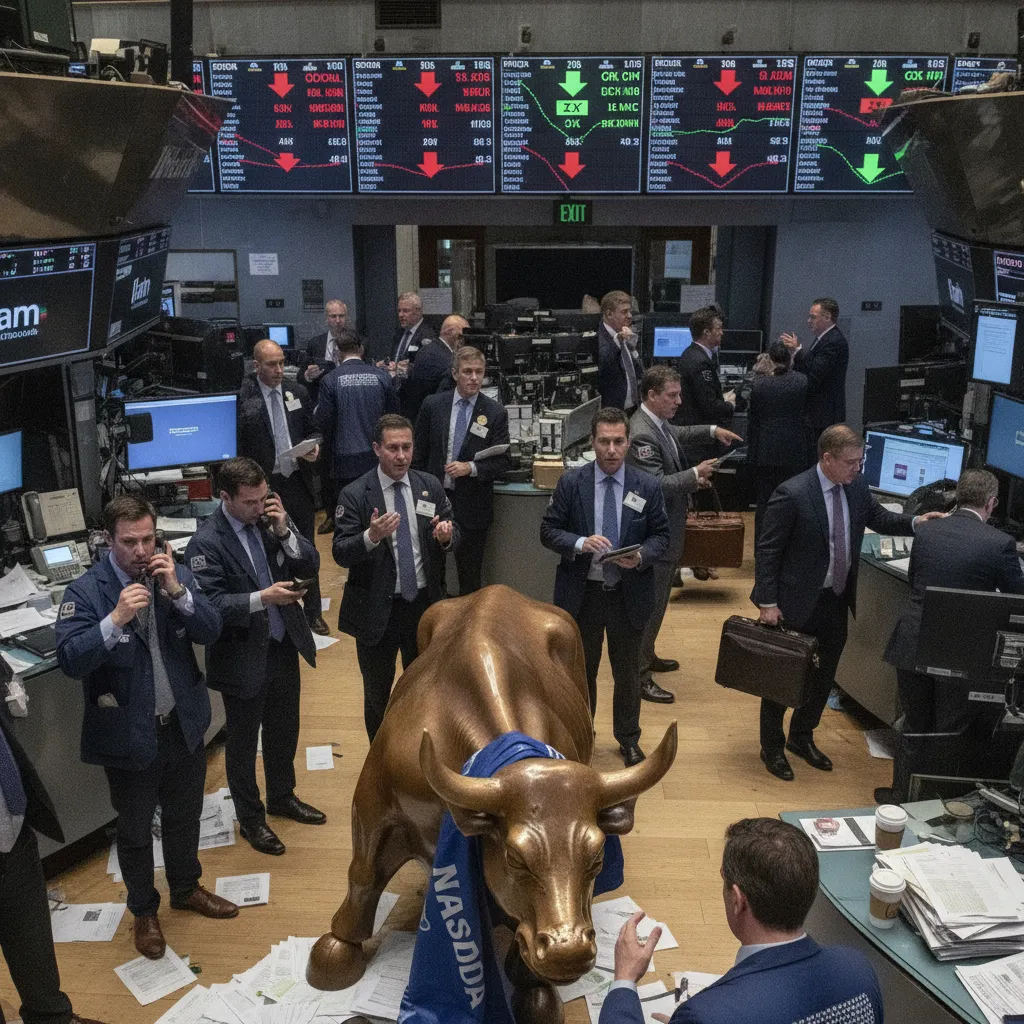
Wall Street has entered what experts describe as a state of alert, triggering a massive migration of capital away from the once dominant technology sector. After years of fueling relentless market rallies, tech stocks have become magnets for volatility throughout 2026. Investors are increasingly anxious about the actual returns on massive artificial intelligence investments, questioning whether the staggering levels of capital expenditure and debt associated with AI are sustainable or if the industry is simply inflating a bubble that is now starting to leak.
This nervousness reached a boiling point following the Democratic sweep of the U.S. midterms, which added fresh political pressure to Big Tech firms like Nvidia, Microsoft, and Apple. The fallout has been felt globally, with the Nasdaq struggling to maintain its footing and South Korea’s semiconductor heavy Kospi index suffering severe losses. While the information technology sector spent the first half of the year in the penthouse of performance, it has plummeted toward the outhouse in recent months, shifting from the top performing asset class to one of the worst.
In response to this instability, traders are pivoting toward defensive havens such as healthcare, utilities, and consumer staples. These sectors are traditionally viewed as safe harbors during periods of geopolitical or economic turmoil. This flight to safety has been further accelerated by soaring oil prices linked to conflict between the U.S. and Iran, making energy another resilient pillar for portfolios seeking protection against a darkening economic outlook for next year.
However, some strategists warn that this pendulum swing may have gone too far. Analysts at HSBC suggest that while tech valuations have suffered a vicious de rating, companies like Walmart are now trading at near record highs relative to their earnings. With many fundamentally healthy tech giants trading at historic lows compared to stability plays, some believe the current rotation into defensive stocks has become extreme, leaving opportunistic investors wondering if the panic provides a rare buying window for discounted innovation.