
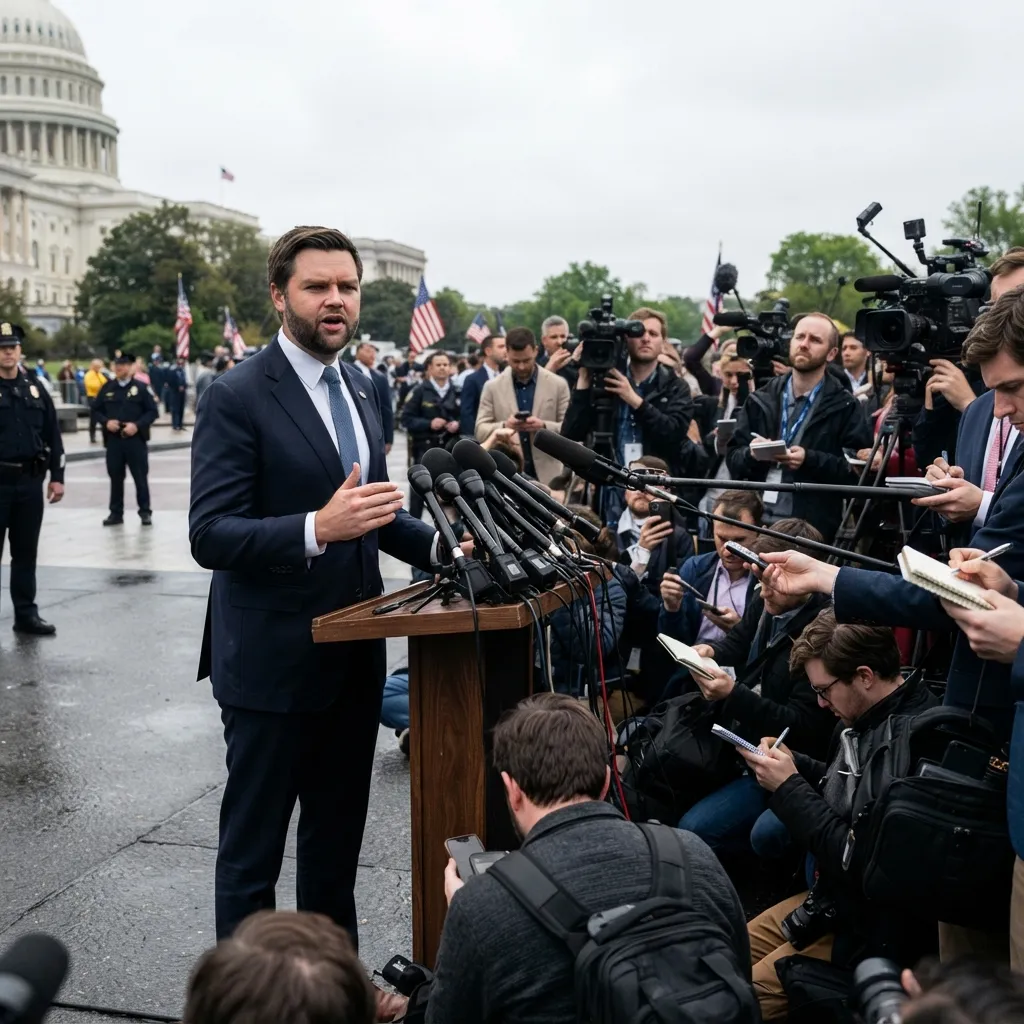
Vice President JD Vance is urging Americans to ignore the impulse to build bunkers or hoard supplies despite a chaotic week of infrastructure collapses. Speaking with Fox News, Vance dismissed fears of an impending crisis, suggesting that while general preparedness is wise, there is no immediate threat requiring citizens to stockpile food and water. His remarks come as an attempt to calm a public rattled by a series of high profile outages involving Microsoft, Apple, the NSA, and several major national banks, alongside a significant grounding of flights by the FAA.
While the White House insists these failures were isolated incidents caused by software bugs and routine maintenance rather than a coordinated cyberattack, international allies are sending a different message. Governments in the United Kingdom, Japan, and Germany have recently launched campaigns encouraging their citizens to maintain several days’ worth of emergency rations and water. This creates a jarring contrast between the reassuring tone coming from Washington and the proactive caution being advised across the Atlantic and Pacific.
The dissonance extends even within the U.S. government itself. While Vance tells the public not to panic, Defense Secretary Pete Hegseth has introduced a Pentagon initiative known as FORTRESS. Internal documents reveal that this plan requires major military installations within the continental United States to be capable of sustaining essential operations independently for up to 90 days. To Vance, this represents successful governance and strategic investment rather than a warning sign of imminent danger, but for many observers, it suggests the military is bracing for a scenario much worse than those described in public briefings.
Experts suggest that this gap in messaging may further erode public trust in government communications. With political polarization at an all time high following recent midterm elections, confidence in official safety warnings often splits along party lines. Analysts argue that when leaders minimize systemic vulnerabilities while their own defense departments prepare for long term isolation, it leaves citizens wondering whether they are receiving an honest assessment of risk or merely a curated political narrative designed to prevent instability.